Summary:
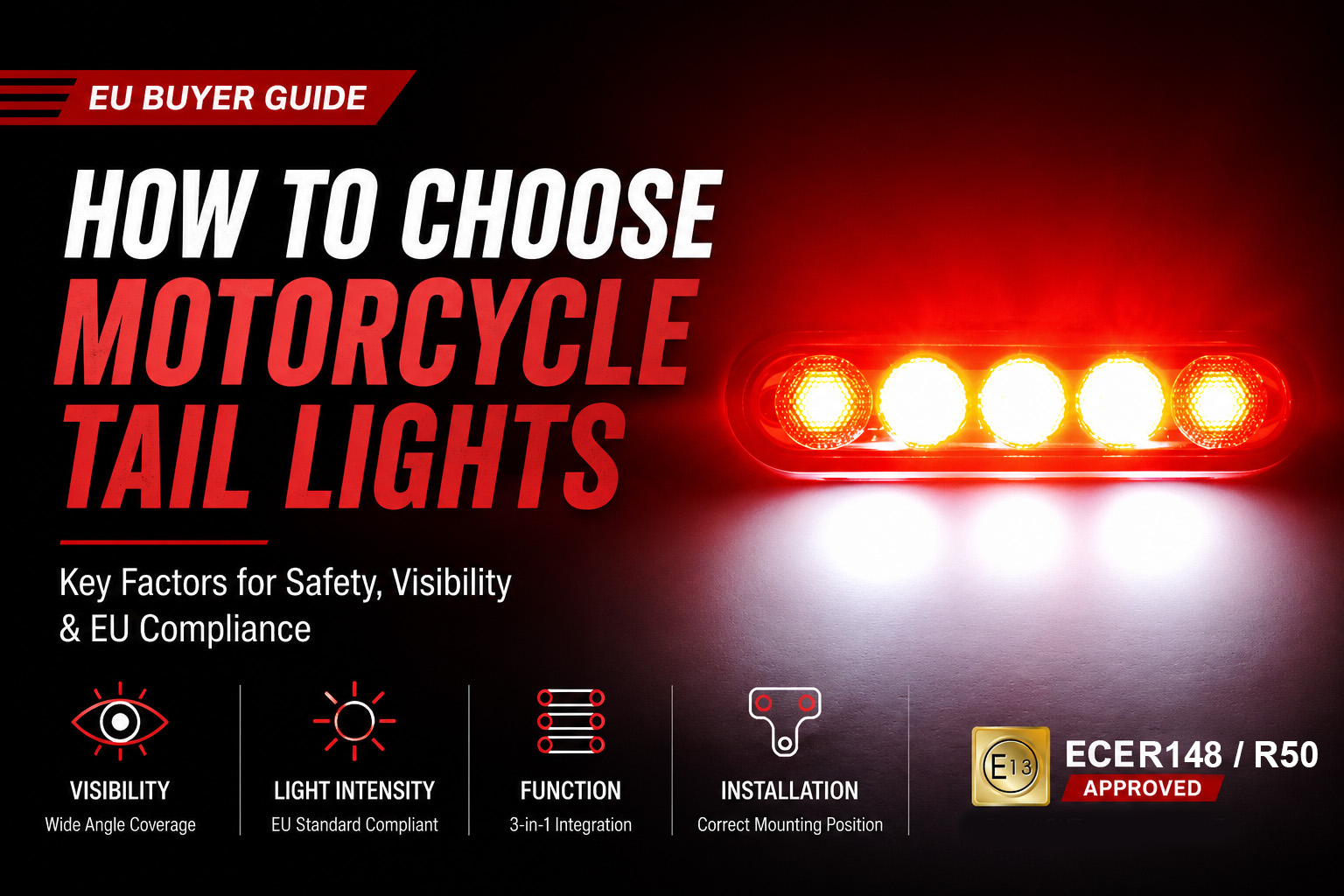
The best motorcycle tail light for EU markets must be E-Mark certified, provide controlled visibility without glare, and ensure durability under all conditions. Compliance with UNECE regulations is essential for road-legal use and successful homologation.
Motorcycle Tail Lights: How to Choose for EU Compliance
Motorcycle tail lights for Europe must meet strict regulatory and design requirements. You must evaluate compliance with EU regulations, including light intensity, visibility angles, function separation, and installation position. Poor design decisions can lead to failed homologation and costly redesigns.
Key Factors When Choosing Motorcycle Tail Lights
● Legal certification (E-Mark / DOT)
● Brightness and visibility
● Durability and waterproof design
● Integration with vehicle system
Why E-Mark Certification Matters
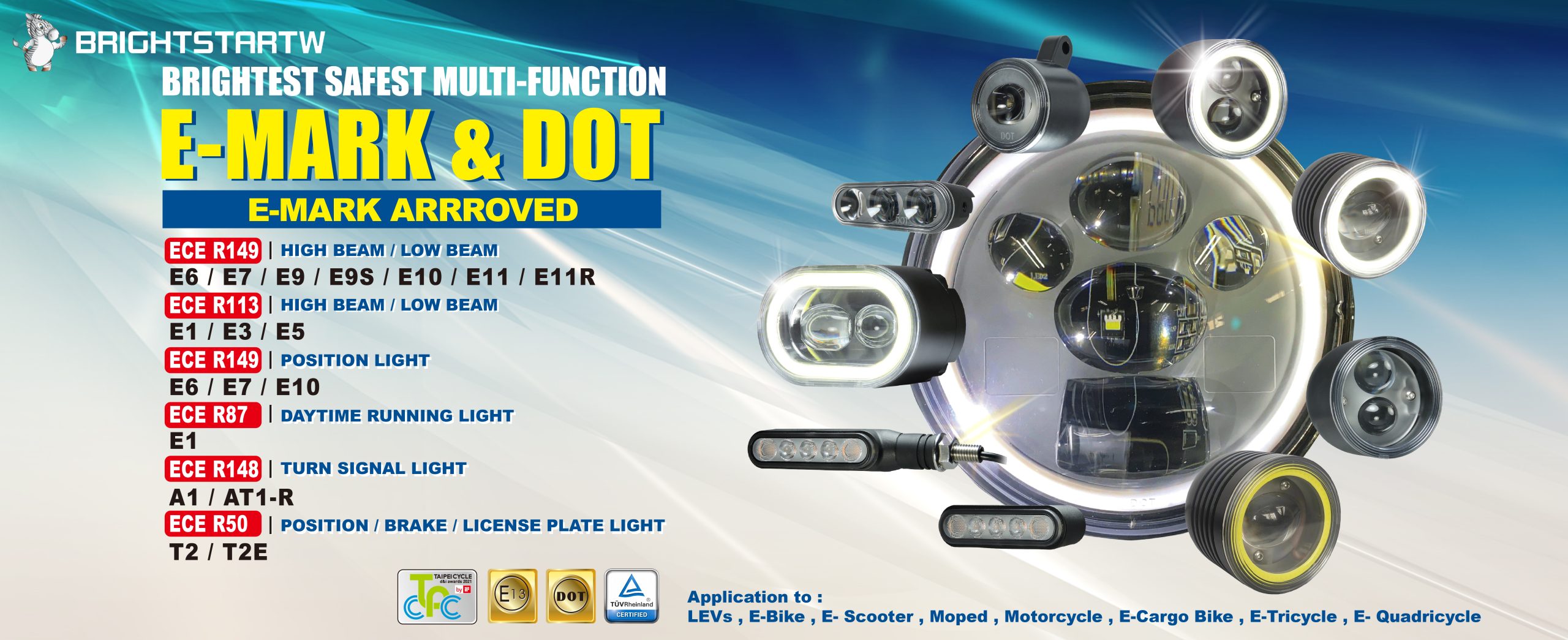
E-Mark certification ensures that the tail light complies with UNECE regulations, making it legal for road use in Europe and ensuring proper light distribution.
Common Mistakes When Choosing Tail Lights
● Choosing brightness over beam control
● Ignoring legal compliance
● Using low-quality materials
🔍 Compliance Starts Before Certification
Many teams assume E-MARK certification is the final step. In reality:
Compliance is determined during design — not testing.
Even certified components can fail at the vehicle level if:
● Installation position is incorrect
● Light visibility is obstructed
● Signal functions overlap improperly
This is why understanding EU regulations is critical when selecting tail lights.
⚖️ Key Regulations for Motorcycle Tail Lights in Europe
Motorcycle tail lights in Europe are regulated under UNECE standards such as R48 and R148, which define installation, visibility, and performance requirements.
Detailed Technical Risks in Tail Light Design
1. Light Intensity Requirements
Tail lights and brake lights must meet defined luminous intensity ranges.
● Too low → insufficient visibility
● Too high → glare and non-compliance
Proper optical design is required to stay within the approved range.
2. Visibility Angles
EU regulations require tail lights to be visible across specific horizontal and vertical angles.
● Up to 180° horizontal visibility
● Defined vertical visibility range
Poor lens design or housing integration can easily violate this requirement.
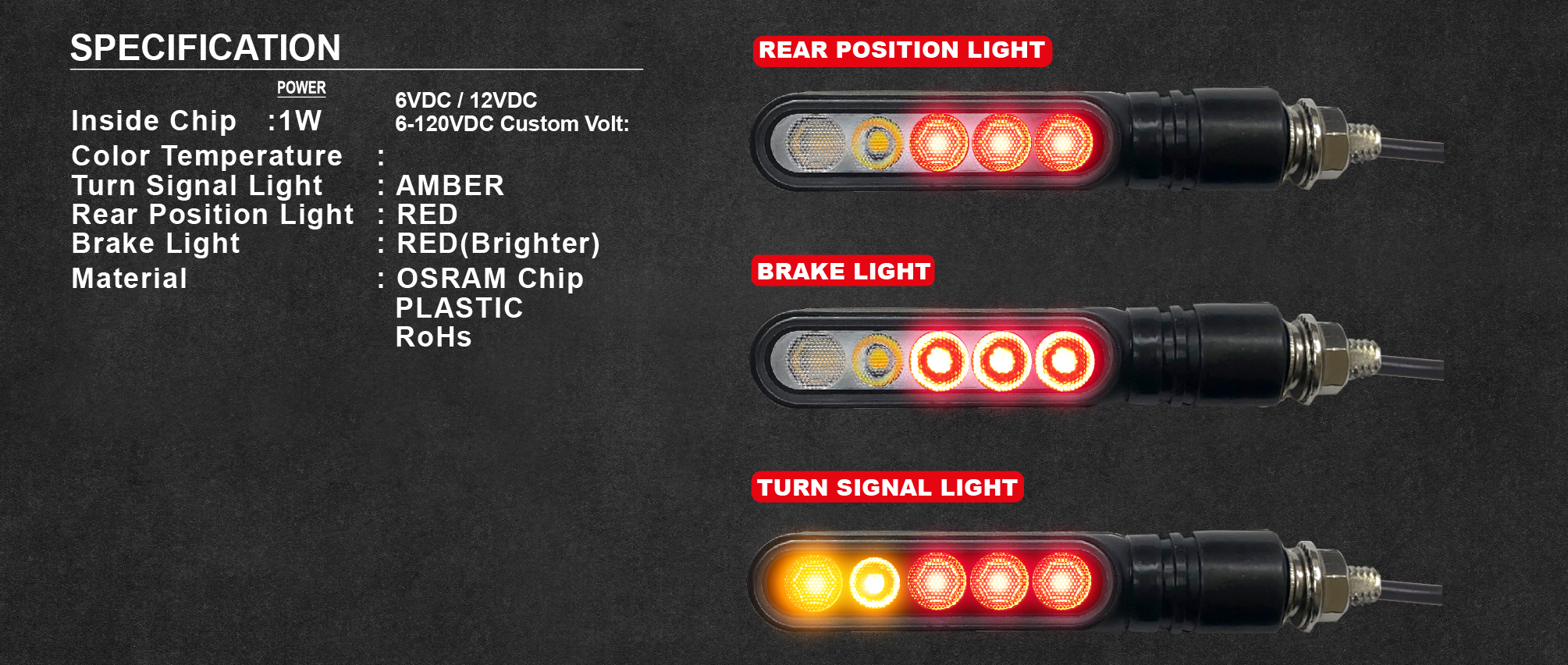
3. Function Separation
Different lighting functions must be clearly distinguishable:
● Tail light
● Brake light
● Turn signal
Over-integrating functions without proper optical separation can lead to compliance failure.
4. Installation Position
Even a certified tail light can fail if installed incorrectly.
● Mounting height
● Distance between indicators
● Angle relative to vehicle axis
This is one of the most common causes of homologation failure.
5. Electrical Stability
Regulations also define how lights behave:
● Brake signal intensity difference
● Turn signal flashing frequency
● Consistent illumination
Unstable electronics can result in non-compliance even if optics are correct.
Key Insight:
In EU vehicle lighting, compliance is not achieved by certification alone, but by proper system integration, optical design, and installation conditions.
🚨 Selection Risks
● Ignoring vehicle integration → Component compliance ≠ system compliance
● Overly compact design → May sacrifice visibility
● Over-integration of functions → Signal clarity issues
● Late-stage certification approach → Increased cost and delay
👉 Pre-Certification Checklist
● Does it meet EU luminous intensity requirements?
● Are visibility angles compliant after installation?
● Are functions clearly distinguishable?
● Is the mounting position compliant?
● Is electrical behavior stable?
These checks should be completed before certification testing.
🚀 Conclusion
Choosing motorcycle tail lights for Europe is not just about selecting a certified product.
It is about designing for compliance from the beginning.
● Reduce development risk
● Avoid costly redesigns
● Accelerate time to market
📩 Need Support for EU Homologation?
If your project involves EU vehicle approval, selecting the right tail light early can prevent costly redesigns.
● OEM / ODM lighting development
● UNECE compliance consulting
● Optical and system integration support
FAQ
What is the best motorcycle tail light for EU compliance?
The best tail light should be E-Mark certified, provide controlled visibility, and meet UNECE requirements for safe road use.
Do motorcycle tail lights require E-Mark certification in Europe?
Yes, E-Mark certification is mandatory for road-legal vehicles in the EU.
Why do E-Mark certified tail lights still fail homologation?
Because compliance depends not only on the component but also on installation, visibility, and system integration.