🚲Cargo Bike Lighting in Europe: Safety, E-Mark & L1e Compliance Guide
The cargo bike lighting system Europe market is rapidly growing alongside the expansion of e-cargo bikes in last-mile delivery and urban mobility.
However, many manufacturers still underestimate one critical factor: cargo bike lighting system performance and integration, especially in terms of safety and regulatory compliance in Europe.
⚖️Cargo Bike Lighting Regulations in Europe (EN 17860 & L1e Requirements)
Cargo bikes are no longer just bicycles.
With the introduction of EN 17860 and increasing adoption in logistics fleets, lighting systems must now meet higher expectations:
● Visibility in dense urban environments
● Compatibility with wider vehicle structures
● Compliance with vehicle-level regulations (L1e category)
👉 In L1e vehicles, E-mark certified lighting becomes mandatory
👉 Reference:
● https://unece.org/transport/vehicle-regulations
● https://standards.iteh.ai/catalog/standards/cen/en-17860
🔍 Cargo Bike Lighting Systems Used Today
Most OEMs rely on established bicycle lighting brands:
● Busch & Müller
● Supernova
● Spanninga
● Herrmans
These solutions are reliable—but they are built for bicycles.
👉 Not for cargo bike lighting applications with larger dimensions and commercial usage
⚠️Key Problems in Current Cargo Bike Lighting Systems
🔴 1. Cargo Bike Turn Signals Are Missing
Most cargo bikes still lack turn signals, especially in 25 km/h models.
👉 A major gap in cargo bike safety lighting
🔴 2. Fragmented Cargo Bike Lighting Architecture
Typical configuration:
● Headlight
● Rear light
● Brake light
👉 All separate
This results in:
● Complex wiring
● Increased assembly cost
● More failure points
🔴 3. Poor Visibility in Cargo Bike Lighting
Cargo bikes are:
● Wider
● Longer
● Often obstructed by cargo boxes
👉 Result:
Side visibility is almost non-existent
🔴 4. No E-Mark Compliance in Most Cargo Bike Lighting
Most systems:
● Follow StVZO (bicycle regulation)
● Not suitable for L1e or commercial fleets
📊 Cargo Bike Lighting vs Vehicle Lighting
Traditional cargo bike lighting:
● Separate components
● Single-function lights
● Limited visibility (front/rear only)
● Bicycle-level compliance
● Not suitable for L1e
BRIGHTSTARTW multifunction lighting:
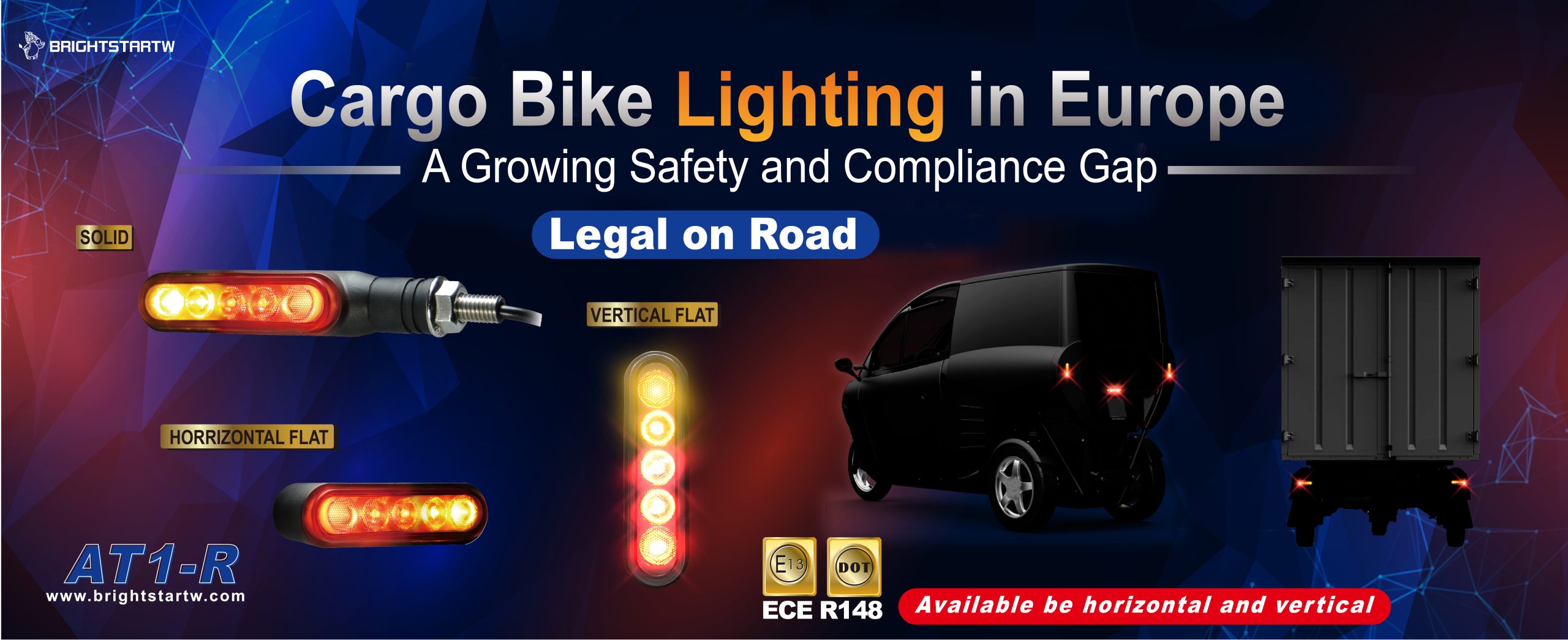
● Integrated module (turn + brake + position)
● Multi-function in one compact unit
● Enhanced multi-angle visibility
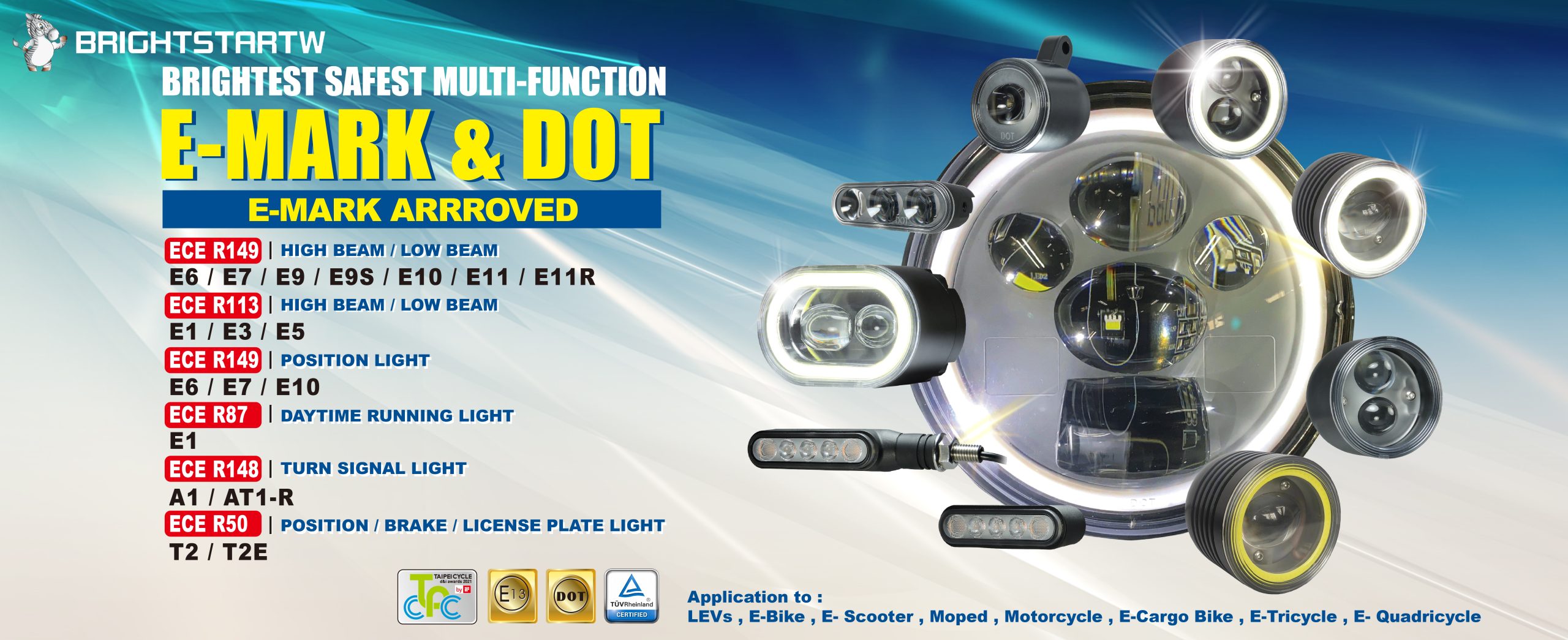
● E-mark certified
● Designed for cargo vehicles
🚀 Why E-Mark Multifunction Lighting Matters for OEMs
✅ 1. Improved Urban Safety
Multi-angle visibility increases detection in real traffic conditions
✅ 2. Reduced Complexity
Fewer parts =
● Less wiring
● Faster assembly
● Lower cost
✅ 3. Design Integration
Supports:
● Minimal design
● Clean vehicle appearance
✅ 4. Faster Market Entry
E-mark certification enables:
● Easier EU homologation
● Expansion into commercial fleets
📈Industry Trend: From Bicycle Products to Commercial Vehicles
The cargo bike industry is shifting toward:
● Fleet operations
● Logistics integration
● Regulatory enforcement
👉 Lighting must evolve accordingly
🔥Final Insight
Cargo bikes do not lack lighting
👉 They lack integrated, compliant, and high-visibility lighting systems
📌Featured Snippet
What is E-mark lighting for cargo bikes?
E-mark lighting refers to EU-approved vehicle lighting systems that meet safety and compliance standards required for road use, especially in L1e category vehicles.
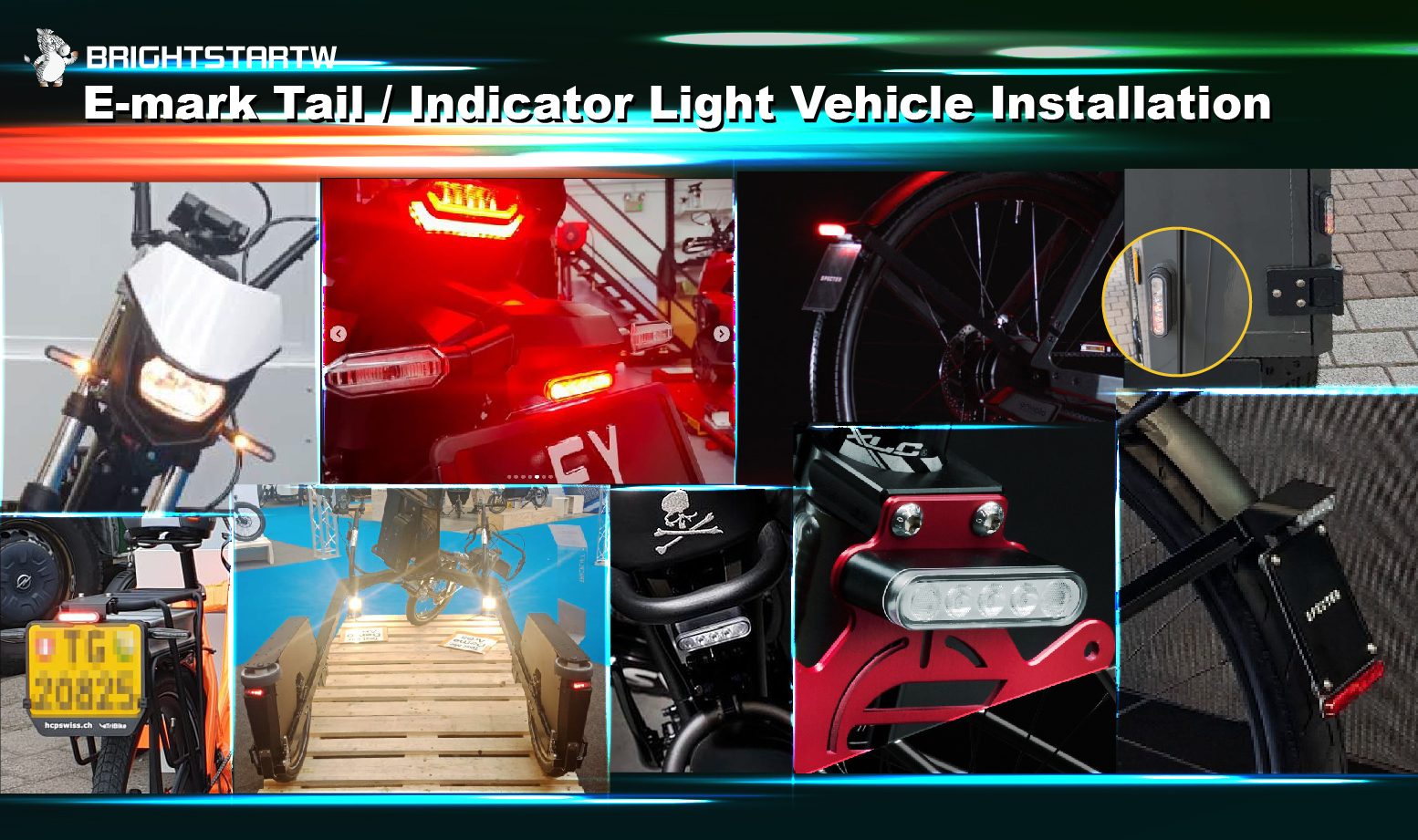
🛒Explore E-Mark Multifunction Lighting Solutions
📣Call to Action
If you are developing cargo vehicles for the European market:
👉 Are your lighting systems ready for:
● E-mark compliance?
● Urban visibility challenges?
● Future regulations?
Now is the time to rethink lighting as a system—not just a component.
❓FAQ
Do cargo bikes need turn signals?
Not always required for bicycles, but increasingly necessary for cargo bikes used in commercial or L1e categories.
What is E-mark certification?
It is a European approval mark indicating compliance with vehicle safety regulations.
📩 Contact BRIGHTSTAR TW: [email protected]