

Summary:
DOT, E-Mark, and K-Mark are different lighting certification standards used in the US, Europe, and Germany. E-Mark and DOT apply to motor vehicles, while K-Mark is designed for bicycle lighting. Understanding these differences helps manufacturers avoid compliance failures, redesign costs, and market entry delays.
DOT vs E-Mark vs K-Mark: What’s the Difference?
When selecting lighting products for motorcycles, e-bikes, or mobility vehicles, manufacturers often encounter three major certification systems: K-Mark, E-Mark, and DOT.
Although these certifications all involve lighting compliance, they apply to different markets, vehicle types, and testing standards.
Choosing the wrong certification can lead to failed homologation, delayed market entry, and costly redesigns.
Quick Comparison of Lighting Certifications
K-Mark
Region: Germany
Application: Bicycle lighting
Standard: StVZO 22A
E-Mark
Region: Europe
Application: Motorcycles, e-bikes, L-category vehicles
Standard: UNECE R113 / R149
DOT
Region: United States
Application: Motor vehicles
Standard: FMVSS 108
(1) Germany K-mark Regulation
(2) Europe E-mark Regulation
(3) U.S. DOT Regulation
K-mark:
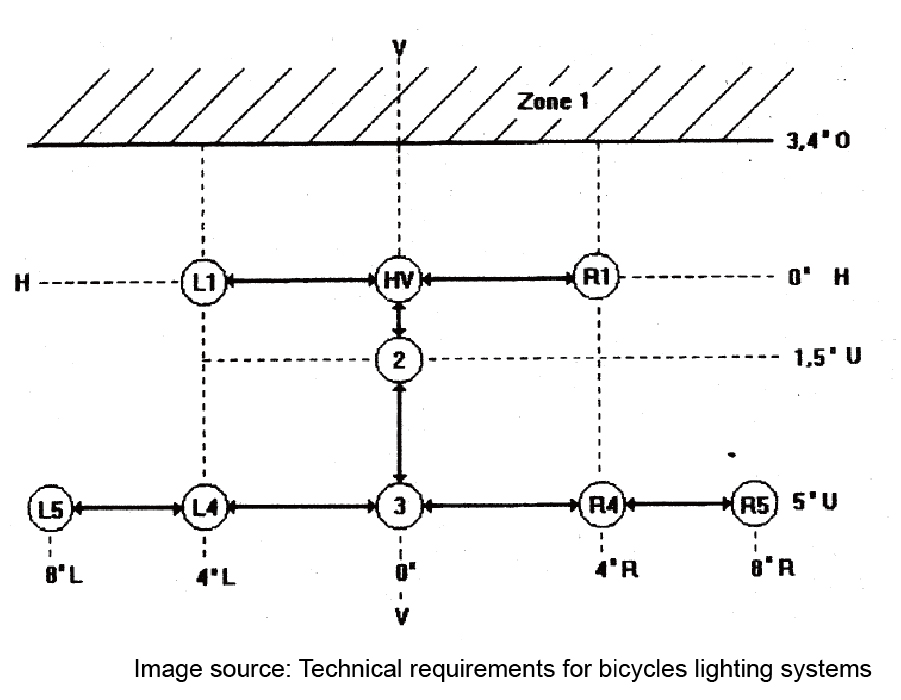
StVZO 22A is the testing standard for Germany Bicycle Lamp.

The low beam in the K-mark regulation still requires a cutoff line but with less brightness and narrower lateral extension.

We make an easy-to-read chart showing the regulatory light beam requirements according to the data for Germany Bicycle light standards!
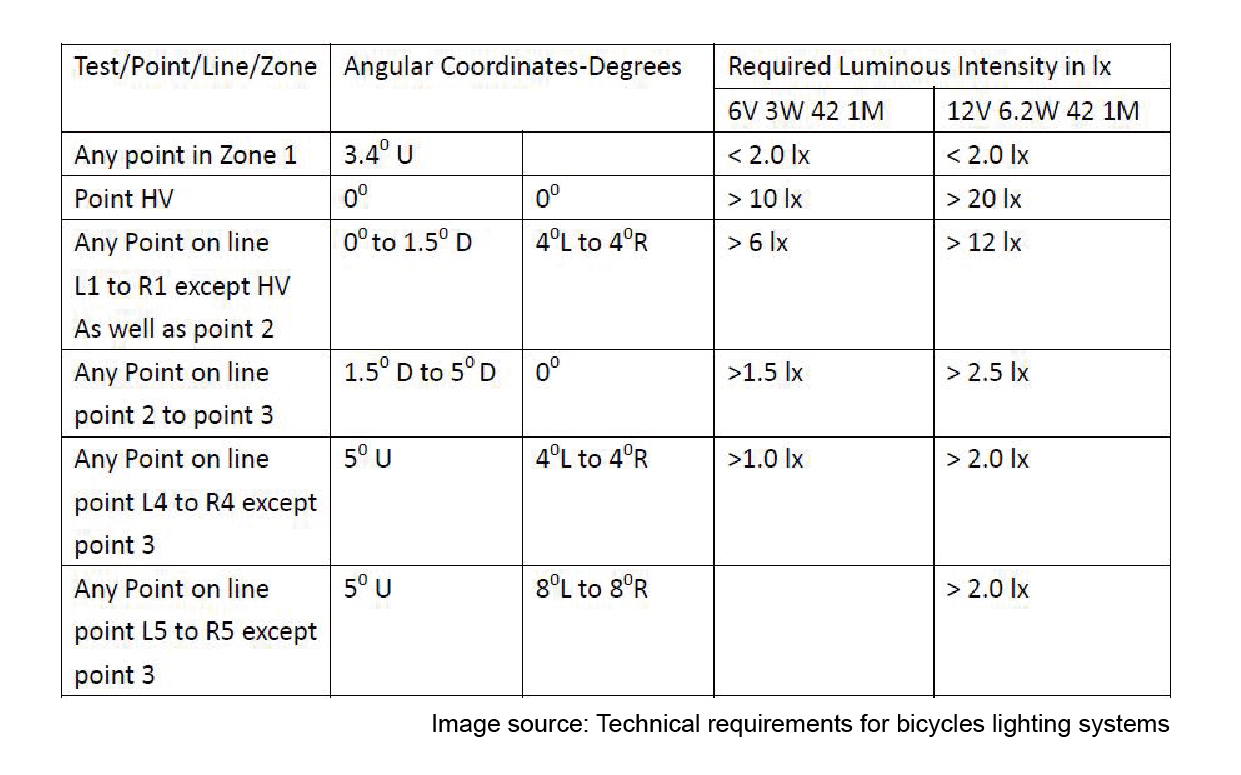
K-Mark certification is primarily designed for bicycle lighting applications in Germany.
It is not intended to replace E-Mark or DOT certification for motorcycles or higher-speed vehicles.
Manufacturers often confuse K-Mark with broader EU compliance requirements.
E-mark:
UN ECE R113/R149(Class A, B, C, D) are the testing standard of European motor vehicle headlamps.
E-mark proves your vehicle or component complies with the relevant EU/ECE regulations and can be sold in the EU, as well as other regions which have signed up to the ECE vehicle regulations and helps manufacturers avoid product recalls and potential revenue loss.
Below is the regulatory light beam requirements according to the data for European Motor Vehicle Class B headlamps standards!
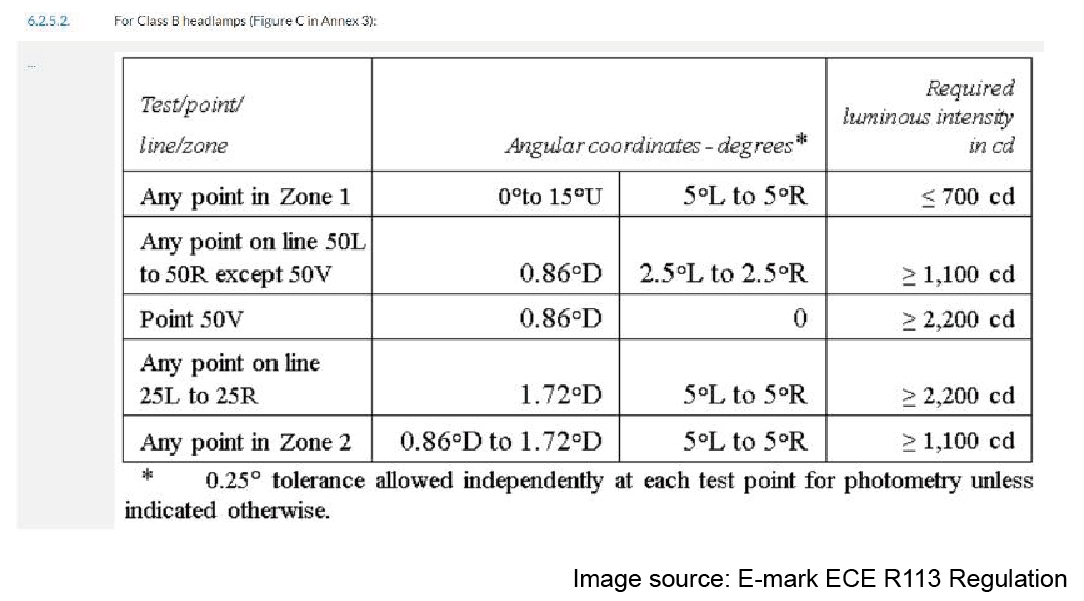
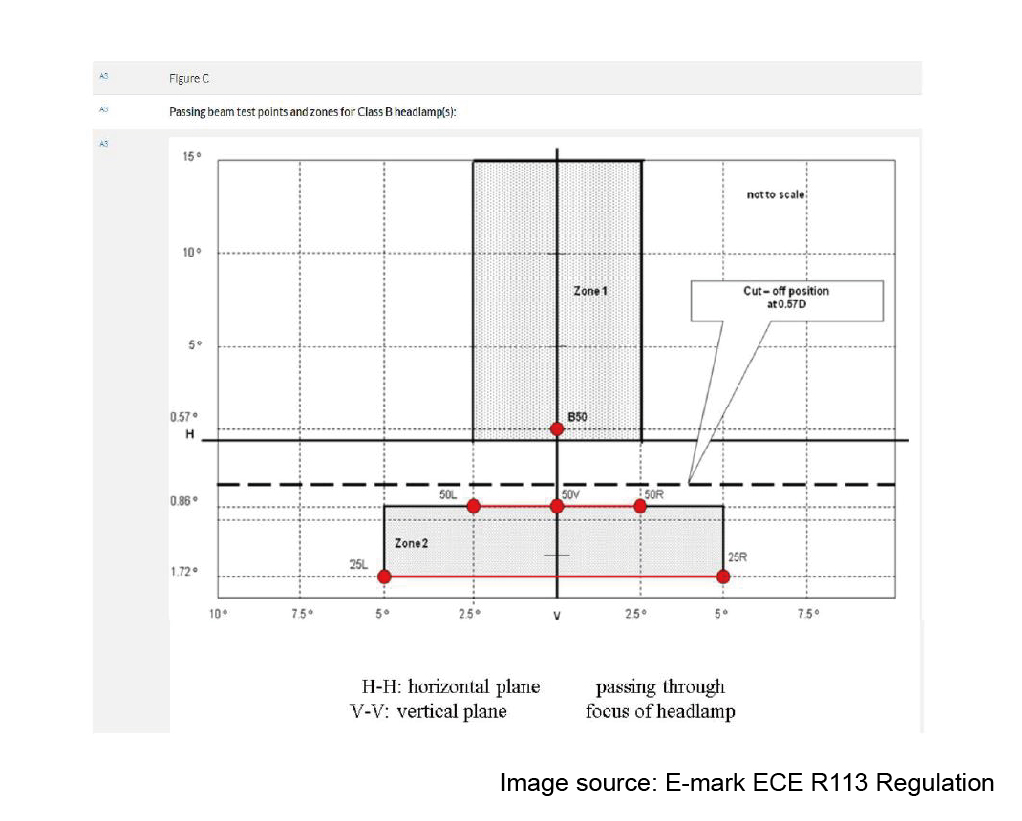
E-Mark certification is required for many road-legal vehicles sold in Europe.
It ensures compliance with UNECE regulations and helps manufacturers avoid recalls, certification failures, and legal issues in EU markets.
DOT Compliant:
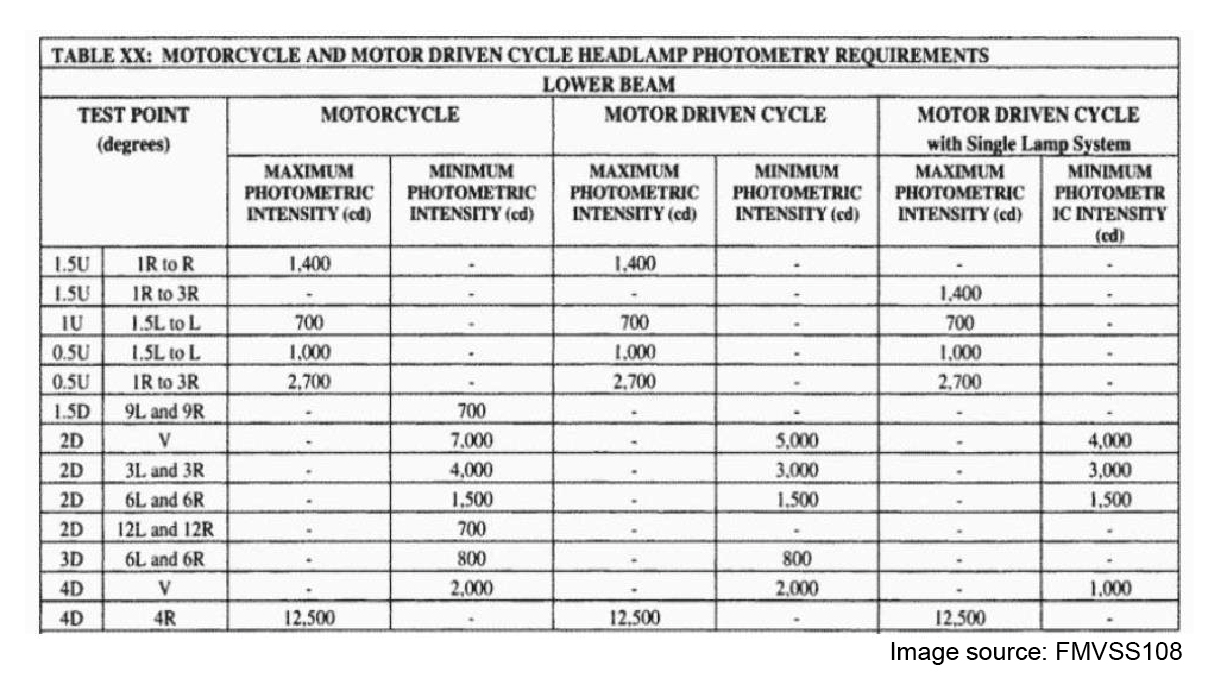
Headlights printed with “DOT” simply indicate that they (manufacturer) comply with the Lighting DOT (FMVSS) standard 108 (571.108).
FMVSS 571.108 is the Standard No. 108; Lamps, reflective devices, and associated equipment.
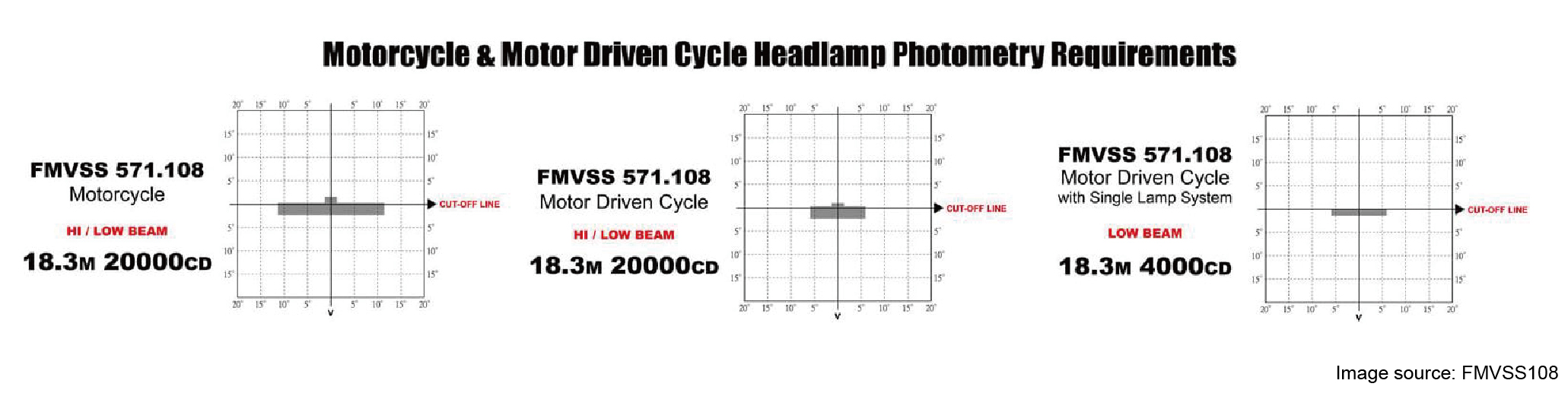
Below is Motorcycle and Motor Driven cycle headlight photometry requirements.
We make an easy-to-read photo showing the regulatory light beam requirements according to the data for DOT standards!
DOT certification applies primarily to the United States market.
Although DOT and E-Mark both regulate motor vehicle lighting, their testing methods and photometric requirements are different.
DOT approval does not automatically qualify products for European markets.
Why Manufacturers Often Confuse These Certifications
Many manufacturers assume these certifications are interchangeable because they all involve lighting performance tests.
However, the biggest differences include:
- Market region
- Vehicle type
- Testing distance
- Photometric requirements
- Measurement standards
Understanding these differences early can prevent expensive development mistakes.
Conclusion
K-Mark is mainly designed for bicycle lighting in Germany.
E-Mark applies to European motor vehicles and e-mobility products.
DOT applies to motor vehicles in the United States.
These certifications are not interchangeable.
Selecting the correct regulation early helps manufacturers reduce compliance risks, avoid redesign costs, and accelerate time to market.

Need help selecting the right certification for your lighting project?
BRIGHTSTAR TW supports OEM and mobility manufacturers with E-Mark compliant lighting development, regulatory planning, and global market entry preparation.
Contact us: [email protected]
FAQ
Is K-Mark accepted for motorcycles in Europe?
No. K-Mark mainly applies to bicycle lighting in Germany.
Is E-Mark required for motorcycles sold in Europe?
Yes. E-Mark certification is often required for road-legal vehicles in European markets.
Can DOT-certified lights be sold in Europe?
Not automatically. DOT and E-Mark use different compliance systems.
Which certification is best for e-bike manufacturers?
It depends on vehicle speed, category, and target market.
Can K-Mark replace E-Mark certification?
No. K-Mark is designed for German bicycle lighting and cannot replace E-Mark certification for motor vehicles.