Engineering Material Selection Brief
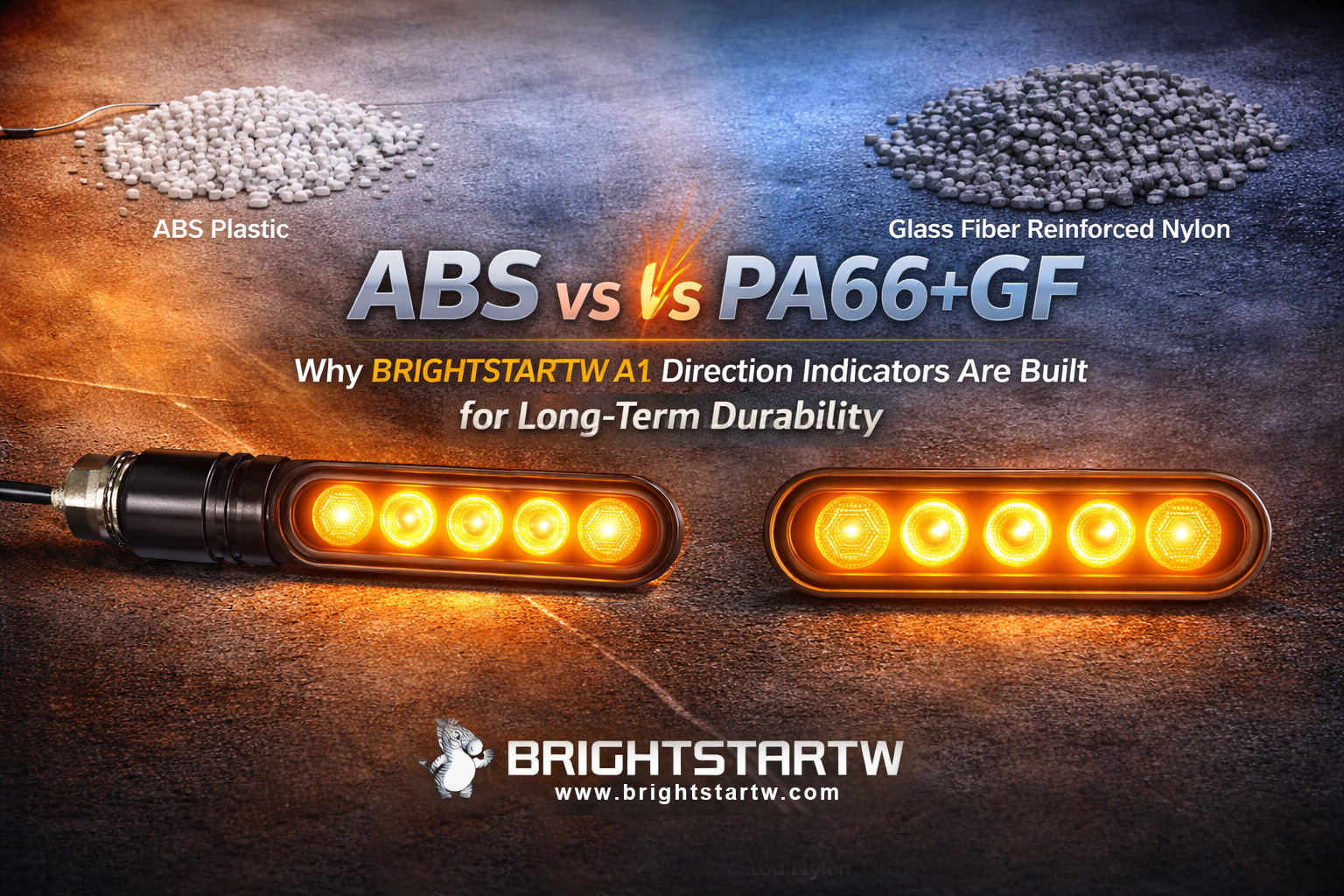
ABS (Common Market Practice) vs PA66+GF (BRIGHTSTAR A1 Design Choice)
PA66+GF Direction Indicator Housing plays a critical role in long-term durability for automotive and mobility signal lamps, especially for applications exposed to high vibration, outdoor weathering, and thermal cycling. Choosing the right direction indicator is not only about light output—it is also about structural reliability, where housing material directly affects sealing performance, mounting strength, and long-term structural integrity.
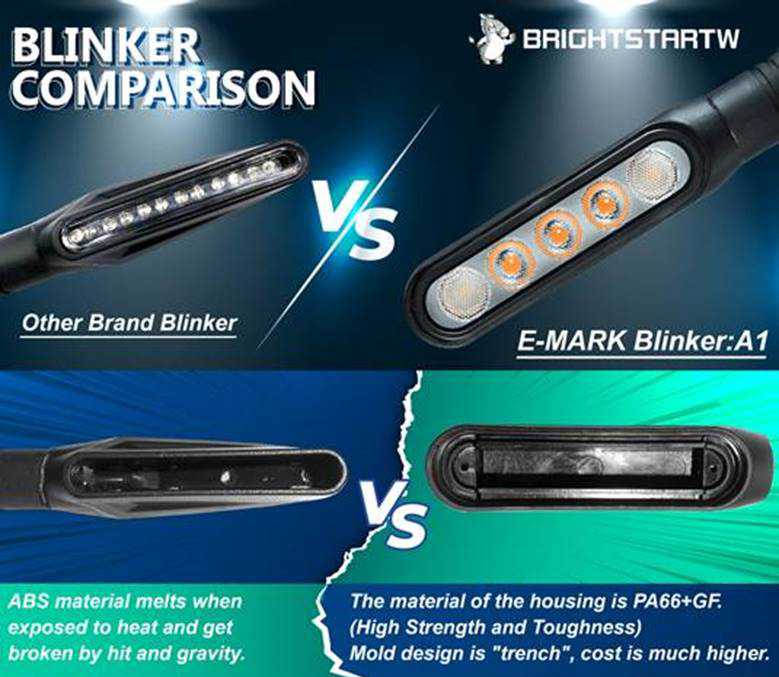
In today’s market, many direction indicators use ABS housings due to cost efficiency and ease of manufacturing. In contrast, BRIGHTSTARTW A1 direction indicators are engineered with PA66+GF (glass-fiber reinforced Nylon 66) to achieve higher mechanical strength, superior thermal stability, and improved long-term reliability.
This article explains the engineering rationale behind that material selection and how it supports customers in choosing a more durable solution.
Why Direction Indicator Housing Material Matters in Real-World Applications
Direction indicators are frequently exposed to demanding environments, including:
. Continuous vibration from commercial vehicles, trailers, and industrial equipment
. Outdoor weathering such as UV radiation, humidity, and rain
. Temperature rise near lamps, braking systems, or engine bays
. Mounting stress from screw bosses, brackets, and fastening points
Over time, these conditions may lead to common failure modes such as:
. Cracking at screw bosses and mounting ears
. Warpage that reduces sealing pressure
. Fastening loosening caused by material creep
. Fatigue failure under long-term vibration
. Brittleness and cracking due to UV aging
For customers seeking durability and reduced maintenance, housing material selection becomes a critical engineering decision.
Material Overview: ABS vs PA66+GF for Direction Indicator Housing
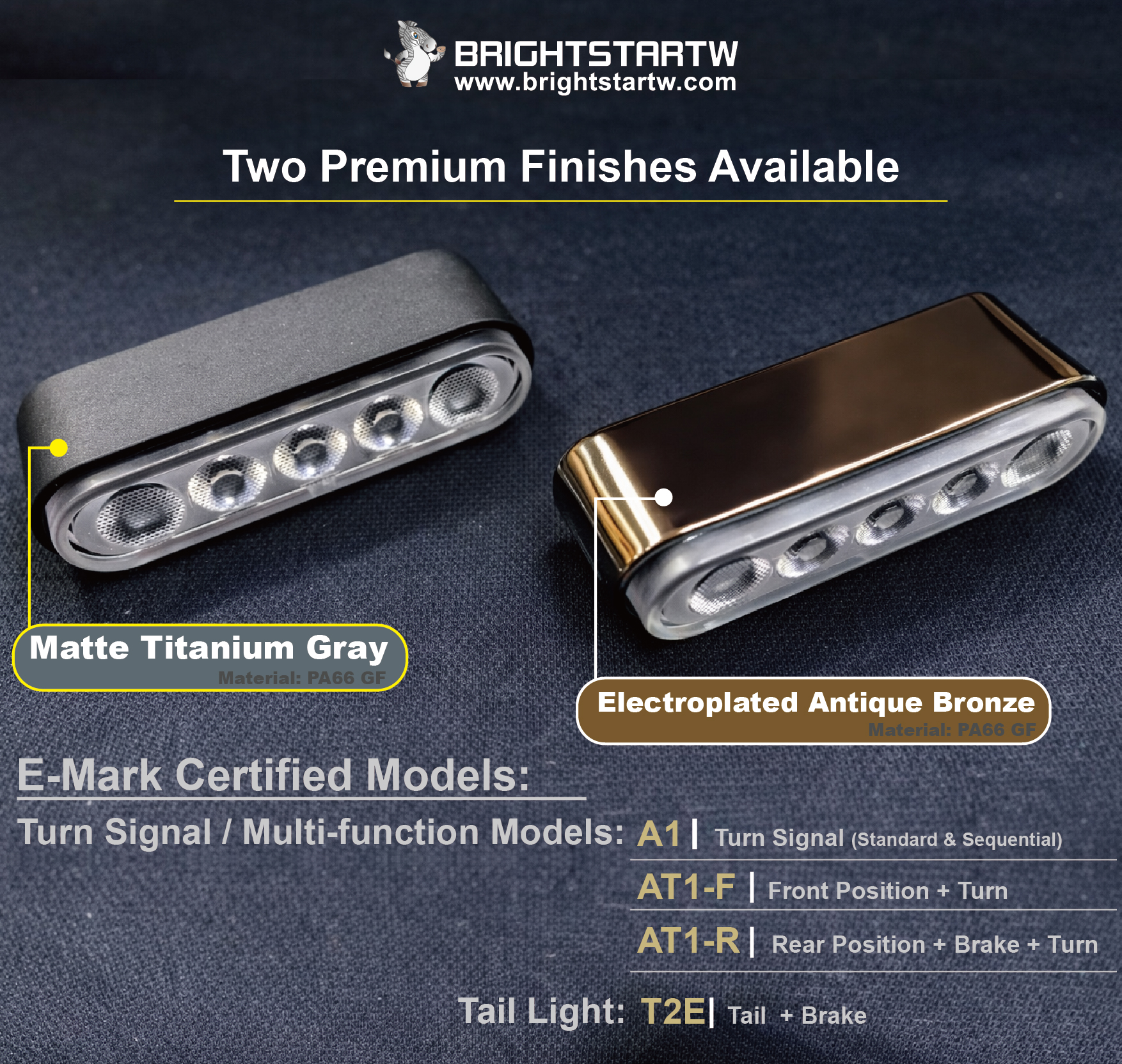
BRIGHTSTARTW A1 direction indicators are available in two PA66+GF housing finishes, providing design flexibility without compromising durability.
ABS (Common Market Solution)
ABS (Acrylonitrile Butadiene Styrene) is widely used in general-purpose applications because it offers:
. Low material cost
. Good surface appearance
. Easy processing and molding
However, ABS can be vulnerable in long-term outdoor and high-stress environments. Thermal cycling, vibration fatigue, and UV exposure may gradually reduce toughness, increasing the risk of cracking or deformation in high-stress areas.
PA66+GF (BRIGHTSTARTW A1 Solution)
PA66 (Nylon 66) is a high-performance engineering polymer. When reinforced with glass fiber (GF), it delivers properties well suited for automotive and structural components, including:
. Higher mechanical strength and stiffness
. Stronger resistance to creep under long-term load
. Improved fatigue durability under vibration
. Superior thermal stability and dimensional retention
For these reasons, PA66+GF is widely used in automotive structural components where long service life is required.
Engineering Comparison: Direction Indicator Housing Durability
1. Structural Strength and Mounting Integrity
Critical areas: screw bosses, mounting ears, clips, thin-wall transitions
. ABS: Suitable for light-duty use, but stress concentration areas may crack over time, especially after aging
. PA66+GF: Higher stiffness and strength improve mounting robustness and reduce cracking risk
Customer value: fewer mounting failures, reduced replacement frequency, and improved mechanical reliability
2. Thermal Stability and Warpage Resistance
Risk: elevated temperatures can cause permanent deformation, affecting fitment and sealing
. ABS: More susceptible to warpage under heat, potentially compromising sealing performance
. PA66+GF: Better dimensional stability helps maintain sealing geometry and assembly tolerances
Customer value: improved sealing reliability and lower risk of leakage in high-temperature environments
3. Creep Resistance and Fastening Retention
Risk: long-term load leads to material creep, reduced clamp force, and loosening
. ABS: Higher creep tendency under sustained load
. PA66+GF: Improved creep resistance maintains fastening force and sealing compression
Customer value: enhanced long-term fastening stability and reduced loosening-related failures
4. Fatigue and Vibration Durability
Risk: constant vibration accelerates fatigue crack growth
. ABS: Fatigue resistance may decline after thermal and UV aging
. PA66+GF: Glass fiber reinforcement improves vibration fatigue resistance
Customer value: higher reliability for commercial vehicles and industrial equipment
5. Outdoor Weathering and UV Exposure
Risk: UV radiation accelerates embrittlement and cracking
. ABS: Often requires strong UV stabilization to avoid long-term brittleness
. PA66+GF: Better baseline suitability for automotive and outdoor structures
Customer value: greater confidence in long-term outdoor operation
Built for Automotive Compliance: E-Mark Approved to UNECE R148
Beyond material durability, BRIGHTSTARTW A1 direction indicators are designed for regulatory compliance.
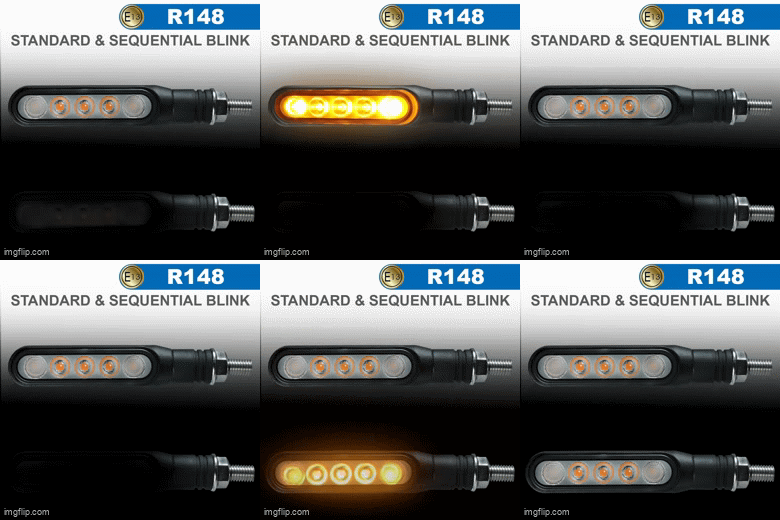
The product is E-Mark approved and compliant with UNECE Regulation No. 148 (R148).
UNECE R148 defines technical requirements for vehicle lighting and light-signalling devices, supporting market access in regions operating under UNECE regulatory frameworks.
Customer value: reduced compliance risk and faster qualification for regulated markets.
Practical Selection Guidance: Who Benefits Most from PA66+GF?
PA66+GF direction indicators are particularly suitable for:
. Commercial vehicle operators focused on uptime and reduced maintenance
. Industrial equipment subject to continuous vibration
. Applications exposed to weathering and thermal cycling
. Customers experiencing recurring failures such as cracked housings, loose mounts, or water ingress
For light-duty or cost-driven applications, ABS-based solutions may be acceptable.
However, for long-term durability, PA66+GF provides a clear reliability advantage.
Conclusion: BRIGHTSTARTW A1 Is Engineered for Long-Term Reliability
For applications requiring durability and compliance, PA66+GF direction indicator housing offers a clear long-term reliability advantage.
Housing material plays a critical role in direction indicator durability. While ABS is widely used for cost reasons, it may face limitations under vibration, heat, and prolonged outdoor exposure.
BRIGHTSTARTW A1 direction indicators use PA66+GF to deliver:
. Stronger mounting integrity
. Improved thermal stability and warpage resistance
. Enhanced long-term fastening retention
. Higher vibration durability
. A robust foundation for outdoor reliability
. E-Mark approval to UNECE R148
If your application requires dependable performance with lower replacement frequency, BRIGHTSTARTW A1 is engineered to be the durable choice.
UNECE Regulation No. 148 – Vehicle Lighting Requirements
European Union Product Compliance Overview
Engineering Plastics Reference – Nylon 66
Looking for a more durable direction indicator for high-vibration or outdoor applications?
Contact BRIGHTSTARTW for A1 product details, certification documents, or application support.
📩 Contact us: [email protected]